
ADAS Calibration Training:
A Guide for Auto Glass Shops
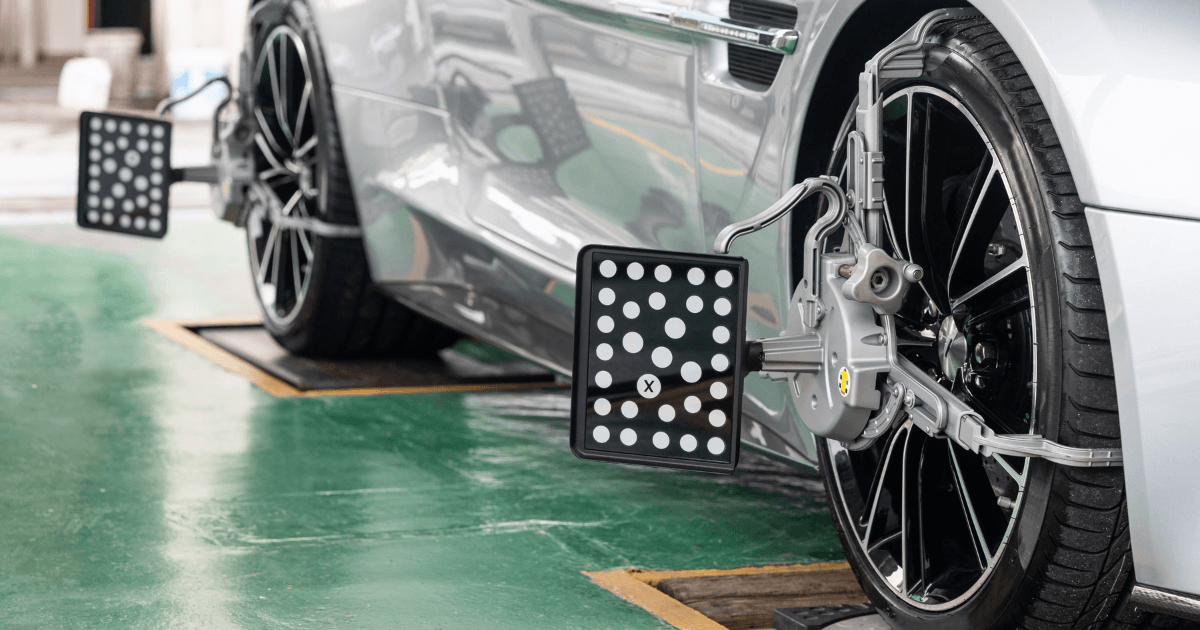
There was a time when the windshield replacement was finished when the glass was set. With today’s technology, that’s often no longer the case, and the change puts ADAS calibration training near the top of the priority list for many auto glass shops.
Many new vehicles sold in the US now come standard with automatic emergency braking, and a recent NHTSA rule requires it on all new vehicles by September 2029. The camera behind that system usually sits right at the glass your technicians replace. When the windshield moves, the camera moves with it. If nobody restores it to spec, the cleanest install still sends the customer home with a compromised vehicle.
Let’s look at what calibration involves, why trained technicians protect your customers and your reputation, and where to find the training you need.
What Is ADAS Calibration?
Advanced Driver Assistance Systems (ADAS) include features like automatic emergency braking, lane keeping assistance, and adaptive cruise control that rely on a network of cameras and other sensors on the vehicle. On most vehicles, the primary forward-facing camera mounts to a bracket on the windshield itself. Replacing that windshield disturbs the camera’s position, and even small changes to the camera’s position, pitch, and yaw can deteriorate the vehicle’s image recognition and distance calculation capabilities.
Calibration is the process of recording the camera’s new coordinates so that the safety systems can be returned to their original specifications after the glass is replaced. Calibration comes in two forms:
Static calibration happens inside the shop. The technician positions targets at precise distances and heights in front of the vehicle, on a level floor with controlled lighting, and runs the procedure through a scan tool.
Dynamic calibration happens on the road. The technician drives the vehicle at set speeds on well-marked roads while the system relearns its aim using lane lines and surrounding traffic.
Some vehicles require one type. Some require both. The automaker sets the requirements, and they often vary by make, model, trim, and equipment package. Subaru’s EyeSight system is one example, but every major automaker sets its own requirements. That variation is exactly why ADAS calibration training matters.
Calibration Determines Whether the Customer Leaves Happy
When a driver needs windshield replacement, they judge their whole experience with your shop, not just the glass. Picture the job from their side. The install looked clean, the price was fair, and the technician arrived and left on time. Then, just a few miles down the road, a warning light comes on, and the lane keeping assistance shuts off, or isn’t working like it used to. Now that customer is calling your shop back, taking a second day off work, and wondering what else was missed.
Every skipped or failed calibration is a risk that cascades. A comeback costs you a bay, a technician’s time, and the customer’s confidence. A poor online review costs more.
This stopped being an edge case years ago. AutoBolt’s Auto Glass ADAS and Technology Report concluded that 89% of model year 2023 vehicles had windshields requiring calibration after replacement, up from 25% for model year 2016. That percentage is on the rise.
Calibration is the second half of modern auto glass replacement jobs. A shop that quotes glass and calibration together, completes both in one visit, and verifies the systems before handing back the keys looks like the professional operation it is. The customer drives away with every safety feature working, and they remember it.
Why Invest in ADAS Calibration Training?
Calibration is precision work. Target placement is measured in millimeters, floor and lighting conditions matter, and every automaker publishes its own procedures. A technician who learned glass replacement a decade ago has none of this in their toolkit unless someone teaches it. Guesswork produces failed calibrations, and failed calibrations produce comebacks.
Formal ADAS calibration training closes that gap, and the returns show up across the business.
- Fewer return visits, redos, and rescheduled jobs
- Calibration revenue that stays in-house instead of going to a dealer or third-party provider
- One-stop jobs that win customers from shops still outsourcing the work
- Technicians who can explain the procedure and its value to a skeptical customer
- A documented, defensible process behind every safety system you touch
Training also protects you as technology quickly moves forward. Automakers add sensors, update procedures, and release new systems every model year. A team with a strong foundation is able to absorb those changes. A team without one fall farther behind with every new vehicle that pulls into the bay.
The investment is real, and so is the payoff.
Where to Find ADAS Calibration Training
Auto glass shops have more training options today than ever. The established resources on the list below are a place to start. One distinction to point out: Training courses teach the skill. Certification tests your skill and credentials it. Some shops aim for one or the other. The best shops pursue both.
Note that this list of established providers is neither a ranking nor an endorsement. The right fit will depend on your equipment, your location, and your team’s experience.
Certications
- Auto Glass Safety Council (AGSC): The industry’s safety organization offers a Glass Calibration Specialist certification, delivered as an online exam covering ADAS systems, static and dynamic procedures, equipment, and safety requirements. AGSC also certifies Customer Service Representatives.
- ASE L4 ADAS Specialist: This advanced certification test covers the diagnosis, service, and calibration of camera, radar, and ultrasonic systems, with a work experience requirement for full certification. Whichever route you choose, make sure your team trains on the calibration systems your shop actually runs. General knowledge only carries a technician so far.
Courses
- Auto Glass Academy: This Texas-based trainer has taught auto glass skills since 1992 and runs a three-day, hands-on Calibration Core Essentials class.
- Kaizen Glass Solutions: Kaizen offers glass-industry ADAS training on Autel systems at locations in Texas and North Carolina, including a bilingual class option.
- Autel Academy: The equipment maker runs two- and three-day hands-on ADAS calibration training programs at sites across the country, with the three-day course carrying I-CAR credits.
- I-CAR: The collision repair training organization provides online ADAS courses, hands-on skills development, and free technical resources, including automaker calibration requirement lookups.
- Technical Institutes: Some vocational schools now run short ADAS calibration courses, like the three-day program at the British Columbia Institute of Technology (BCIT).
Whichever route you choose, make sure your team trains on the calibration systems your shop actually runs. General knowledge only carries a technician so far.
Training Can't Fix the Wrong Part
Every option above shares one assumption. The right windshield made it onto the truck.
Modern vehicles make that assumption risky. The same model can carry several different windshields depending on trim and equipment, from HUD and camera bracket variants to rain and light sensors, acoustic glass, and solar glass. Order from memory or from a customer’s guess, and the odds are against you.
When the wrong glass shows up, the failure happens before skill ever enters the picture. The technician arrives, the bracket doesn’t match, and there is nothing to calibrate. Your best-trained technician stands in a driveway with no way to use any of it. The job gets rescheduled, the part goes back with a restocking fee, and the customer starts reading reviews of the shop across town.
Start Every Calibration with the Right Part
You can’t calibrate your way out of the wrong part. Part selection happens at quoting, so accuracy must start there too.
At AutoBolt, we built our solution around a simple standard. Match every customer with the right part the first time.
Enter a VIN or a license plate, and AutoBolt returns the exact OE and aftermarket part numbers for that vehicle, plus the glass features that matter. It also surfaces the calibration requirement right at quoting, whether static, dynamic, or none. Your CSR quotes glass and calibration together on the first call. Your technician arrives with the correct windshield and a clear calibration plan. Your team gets to do the work you trained them for.
Accuracy up front is what makes everything downstream work, including your investment in technician training. Don’t let the wrong part be the reason a right calibration never happens. Start with 10 free VIN decodes. No credit card is required.
Frequently Asked Questions
What is the difference between static and dynamic calibration?
Static calibration is performed in the shop, using targets placed at exact measurements in a controlled environment. Dynamic calibration is performed on the road, with the technician driving at specified speeds while the system relearns using lane markings and traffic. The automaker determines which type a vehicle needs, and some vehicles require both.
Does every windshield replacement require calibration?
No, but the number of vehicle models that do grows every year. If the vehicle has a camera mounted to or aimed through the windshield, the automaker almost always requires recalibration after replacement. The only reliable way to know is to check the requirement for the specific VIN before you quote the job.
How long does ADAS calibration training take?
Most hands-on courses run one to three days. Certification exams, like the AGSC Glass Calibration Specialist test, are taken online and can be completed in a single sitting. Plan extra time for supervised practice, because technicians build real confidence on live vehicles rather than in classrooms.
How much does ADAS calibration training cost?
Costs vary widely depending on format and depth. Online certification exams are the most affordable entry point. Vocational courses cost more, and multi-day hands-on programs carry a higher price tag. The range can feel wide, but even the more expensive options tend to pay for themselves quickly once your team starts keeping calibration revenue in-house instead of sending it out.
Should CSRs get ADAS training too?
Yes, though the content and depth differ. CSRs don’t perform calibrations, but they need to understand the process to quote them properly. A quote that misses a required calibration undercharges the job and surprises the customer later.