
Subaru EyeSight Calibration:
A Shop Owner’s Field Guide
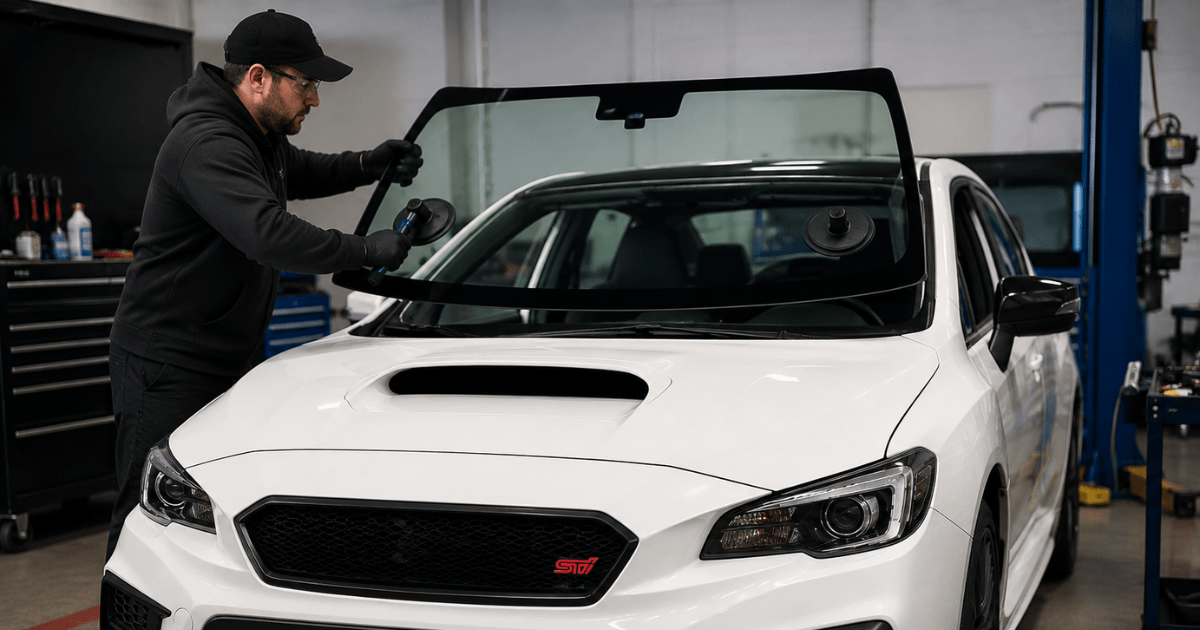
Imagine this all-too-common scenario. A customer calls about a cracked windshield on a Subaru Outback. Your front-desk CSR pulls a price for the glass, quotes it, and books the job. The quote sounds complete. It isn’t. Behind that windshield sits the stereo cameras that run Subaru’s EyeSight driver assistance system, and every EyeSight windshield replacement needs recalibration before the vehicle is safe to drive. A third camera on current-generation Subarus uses a wider field of view to look for cyclists and pedestrians. A quote that leaves out Subaru EyeSight calibration is a callback, a margin hit, or an unhappy customer waiting to happen.
There’s a better way.
Our field guide walks you through how EyeSight calibration works, where shops like yours lose money on these jobs, and how to quote the job correctly the first time.
Table of Contents
- How EyeSight Changes a Subaru Windshield Replacement Job
- Quote the Calibration, Not Just the Glass
- Understand Static, Dynamic, and Dual Calibration
- Match the Glass, Not Just the Part Number
- Get Calibration Right at the Moment of Quote
- Avoid Costly Mistakes on EyeSight Jobs
- Quote the Full Job with AutoBolt
- Frequently Asked Questions
How EyeSight Changes a Subaru Windshield Replacement Job
Subaru EyeSight uses two or three forward-facing stereo cameras mounted at the top of the windshield, near the rearview mirror. Two cameras sit slightly apart, and the system reads the difference between their views to judge distance and depth. That depth reading drives pre-collision braking, adaptive cruise control, lane departure and lane keep assist, and lead vehicle start alert. The thid camera hases a wider field of view it uses to scan for pedestrians and cyclists. Every one of those features depends on the vehicle understanding where the cameras are aiming and positioned.
When a windshield comes out and a new one goes in, the camera position shifts. Subaru’s tolerances are measured in millimeters, so even a careful, correct installation moves the cameras enough to put them out of calibration. The system does not always warn the driver. It can keep running on bad data, reading a vehicle that is 80 feet ahead as if it were farther away. Every time you replace an EyeSight-equipped windshield without accounting for calibration, your shop assumes this risk.
EyeSight is standard or available across most of the current Subaru lineup. Shops see it on the Outback, Forester, Crosstrek, Ascent, Legacy, Impreza, and select WRX models. When one of these rolls in for glass, calibration is part of the conversation, whether the shop raises it or not.
Quote the Calibration, Not Just the Glass
A quote that covers only the glass sets up a chain of problems that lands on your shop, not your customer.
- The job gets underquoted. The customer hears one price on the phone and a higher one after the work, which erodes trust before the invoice is printed.
- The tech gets caught short. A mobile tech arrives to replace glass on a vehicle that also needs a calibration nobody scheduled the time or equipment for.
- The vehicle leaves uncalibrated. Safety features run on bad data, and the shop carries the liability if something goes wrong on the road.
- The customer has to return. A callback for calibration means a second appointment, a second trip, and a customer wondering why it wasn’t handled the first time.
- Your shop’s reputation takes a hit. Nothing hurts your shop’s reputation faster than a safety system that stops working right after a customer thinks the job is done.
When the calibration isn’t part of the initial conversation, the costs of that mistake quickly compound. The fix is knowing what kind of calibration every Subaru needs, then sharing that information as part of a comprehensive quote on the first call.
Understand Static, Dynamic, and Dual Calibration
Accurate calibration processes vary from vehicle to vehicle. Subaru’s Eyesight cameras require both a static and dynamic calibration. For newer models, there’s even more – a third camera requires a separate static calibration and the Eyesight cooling fan requires a function test.
- Static calibration happens in a controlled space. The vehicle sits at a set distance from printed targets on a level floor, and the technician uses Subaru diagnostic software to align the cameras to those targets. It needs room, correct lighting, and the right equipment.
- Dynamic calibration happens on the road. The technician drives the vehicle at set speeds on clearly marked roads so the system can calibrate against real lane lines and traffic. It needs suitable roads and clear conditions.
All Subarus with Eyesight require a static and dynamic calibration, but sometimes there is even more, depending on what generation of Eyesight is equipped. Which one applies comes down to the specific year, model and its EyeSight configuration. This is where quoting lives or dies. The calibration type drives the time, the equipment, and the price of the job. A job that needs three calibrations and a fan test takes longer than a job that needs just a dual calibration.
Knowing the appropriate Subaru EyeSight calibration type before the vehicle arrives can make the difference between a quote that holds and a quote that slips.
Match the Glass, Not Just the Part Number
Subaru EyeSight calibration only holds if the glass underneath it is correct. EyeSight cameras read the road through the top of the windshield, and that section must meet Subaru’s optical specifications. Two windshields can look identical and still differ in thickness, curvature, or clarity in the camera zone. When those properties are off, the cameras misread the road and no calibration fixes it. The appropriate windshield is the one that matches the vehicle’s exact build. That’s why a part number pulled from the VIN, rather than guessed based on year and model, is the basis of an accurate quote.
Get Calibration Right at the Moment of Quote
Getting the whole job right means reading the vehicle’s build at the quote, not after the car arrives. The Vehicle Identification Number (VIN) holds that build. A shop that reads the VIN up front can identify the exact windshield, catch the features that change the glass, such as a heads-up display or a specific camera and sensor setup, and surface whether the job needs static calibration, dynamic calibration, or both. That’s a quote that works from the beginning of the job to the end. The customer knows what to expect, the tech is ready to do the work properly, and the windshield is appropriately calibrated from the moment it leaves your shop.
Avoid Costly Mistakes on EyeSight Jobs
Most auto glass shop losses trace back to a short list of avoidable mistakes. These are the Subaru EyeSight windshield replacement errors that cost shops the most, with the fix for each.
- Quoting the glass alone: This is the most common miss. A shop prices the windshield and forgets the calibration that comes with it, then eats the difference or makes an awkward callback. Quote both together, every time.
- Guessing the calibration type: Static, dynamic, and dual jobs need different time and equipment. A shop that doesn’t know which one applies until the vehicle is on site cannot give a price that holds. Confirm the type from the VIN before booking.
- Using the wrong glass: Glass that looks right but misses Subaru’s optical specifications in the camera zone makes the cameras misread the road, and no calibration corrects it. Match the exact windshield to the vehicle’s build.
- Sending the vehicle out uncalibrated: Skipping calibration to save time leaves safety features running on bad data and puts the liability on the shop. Calibrate and verify before the vehicle leaves the bay.
- Leaning on institutional knowledge: Relying on one veteran CSR to catch EyeSight jobs breaks down the day that person is out or turnover hits. Build the requirement into the quoting process, so every rep catches it.
Quote the Full Job with AutoBolt
AutoBolt’s comprehensive suite of features has been built to simplify complex jobs like quoting a Subaru EyeSight calibration. Our VIN-based part identification solution for auto glass shops surfaces the calibration requirement right alongside the part. You have the complete information you need for a full and accurate quote on the first call.
All you have to do is enter the VIN or pull it from the license plate when the customer doesn’t have it handy. AutoBolt returns the correct OE and aftermarket part numbers for that vehicle, the feature and variant details that change the glass, and the calibration intelligence that tells you whether the job needs a static, dynamic, or dual calibration.
For the Subarus that give shops the most trouble, AutoBolt ‘s Pro Plan adds a layer no parts catalog can. Exclusive vehicle photos put eyes on the vehicle, showing the actual camera and sensor configuration so your CSR can confirm the right glass before the order goes out.
The payoff maps straight to the job. Your team quotes glass and calibration together on the first call. Your techs arrive prepared for the calibration the job actually needs. Your customers get one accurate price and a vehicle that leaves with its safety systems working. Quote on the first call and order right the first time.
That process works for every auto glass replacement shop from independent operators to multi-location operations trying to standardize how every CSR quotes an EyeSight job. New CSRs don’t need years of Subaru experience to quote calibration correctly. They just need the requirement surfaced from the VIN, the same way, every time.
See how AutoBolt handles your next Subaru EyeSight job, from the correct glass to the calibration type, all from the VIN. Start your free trial today. Your first 10 VIN decodes are on us.
Frequently Asked Questions
Does every Subaru windshield replacement need EyeSight calibration?
While not every Subaru is equipped with EyeSight, every EyeSight-equipped Subaru needs recalibration after windshield replacement. The stereo cameras mount at the top of the windshield, so removing and reinstalling the glass shifts their alignment. Confirm the requirement from the VIN before you quote.
Is Subaru EyeSight calibration static or dynamic?
Subaru requires both a static and dynamic calibration, and sometimes a third static calibration. Some Subarus may also require a heating and cooling function test and a rani sensor initialization. Exactly what needs to be done affects how long the job takes and what it costs, which is why identifying it at the quote matters.
Which Subaru models use EyeSight?
EyeSight is standard or available on most current Subaru models, including the Outback, Forester, Crosstrek, Ascent, Legacy, Impreza, and select WRX models. Reading the VIN confirms the exact configuration for the vehicle in front of you.
Can a shop quote calibration before the vehicle arrives?
Yes. When you identify the vehicle from its VIN at the quote, you can surface the calibration requirement along with the correct glass. That lets your CSR quote glass and calibration together on the first call instead of having to call the customer back.
Does AutoBolt perform Subaru EyeSight calibration?
No. AutoBolt identifies the correct part and surfaces whether the job needs static or dynamic calibration from the VIN, so your shop can quote and schedule the full job accurately. The calibration is performed by your technicians or your calibration partner.